






Healthy Lifestyle in Today’s Work Life: How to Stay Fit, Productive, and Stress-Free
Introduction
Maintaining a healthy lifestyle has never been more challenging than it is in today’s fast-paced work environment. Whether you work in an office, from home, or travel frequently for business, long hours, constant deadlines, screen exposure, unhealthy eating habits, and lack of physical activity can quietly chip away at both your physical and mental health.
Many professionals spend 8–12 hours a day sitting in front of a computer, attending virtual meetings, replying to emails, and commuting long distances. This modern work culture often leads to stress, poor posture, back pain, eye strain, sleep disorders, and lifestyle diseases such as diabetes, high blood pressure, and heart disease.
The Good News: You don’t need an expensive gym membership or a complicated diet to stay healthy. Small, consistent changes can boost your energy, focus, and productivity while protecting your long-term well-being. A healthy employee is a more efficient, creative, and resilient one — making health one of the smartest investments you can make in your career.
The Impact of Modern Work Culture on Health
Technology has transformed how we work, increasing efficiency and connectivity — but it’s also introduced new health challenges. Common issues faced by today’s professionals include:
- Sitting continuously for long hours
- Excessive screen time
- Irregular meal timings
- Fast food and processed snacks
- High workplace stress
- Lack of physical exercise
- Poor sleep from late-night work
- Mental burnout and anxiety
- Neck, shoulder, and lower back pain
- Reduced social interaction
Left unaddressed, these issues can compound over the years into serious health complications that affect both your personal life and your professional performance.
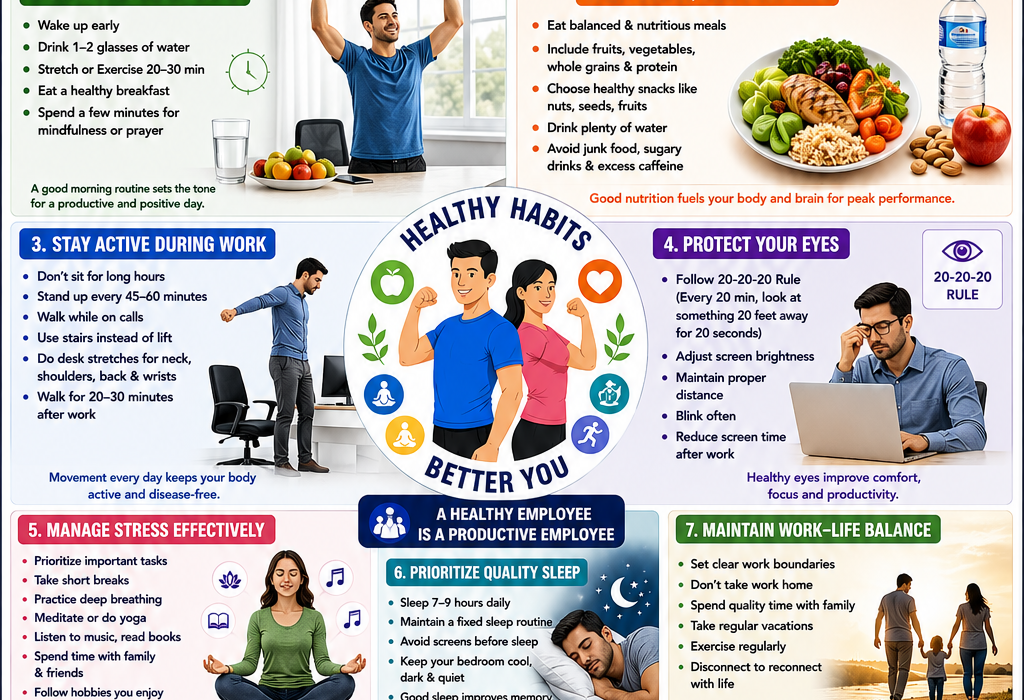
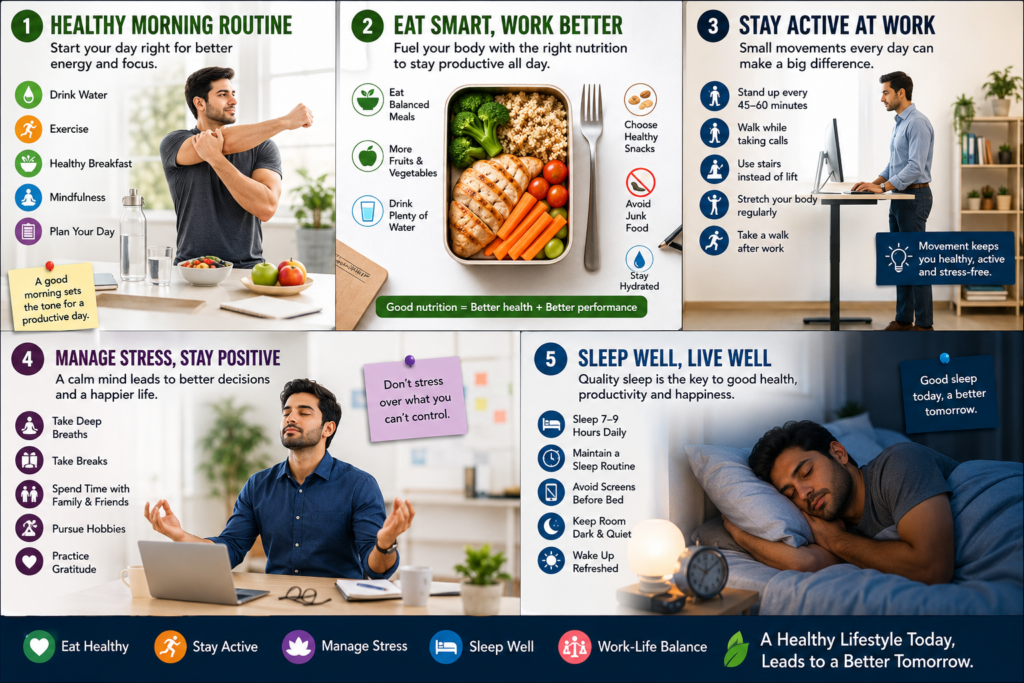
Start Your Day with a Healthy Morning Routine
A productive workday begins before you even open your laptop. Try building these habits into your morning:
- Consistency: Wake up at a consistent time every day.
- Hydrate: Drink 1–2 glasses of water first thing in the morning.
- Move: Stretch or exercise for 20–30 minutes to get your blood flowing.
- Fuel: Eat a protein-rich breakfast to sustain your energy.
- Disconnect: Avoid checking emails immediately after waking up.
- Mindset: Spend a few minutes on mindfulness, journaling, or prayer.
A good morning routine sets the tone for sharper focus and better resilience throughout the day.
Eat Smart During Working Hours
Busy schedules often push people toward convenient junk food. Instead, aim for nutritious meals that provide steady, sustained energy:
- Carry homemade meals whenever possible.
- Include fruits and vegetables daily.
- Choose whole grains over refined foods.
- Snack on nuts and seeds instead of chips or sweets.
- Drink plenty of water throughout the day.
- Limit sugary beverages and excessive caffeine.
Balanced eating helps you avoid the mid-afternoon energy crash and keeps your concentration high.
Stay Active Even at Your Desk
A sedentary lifestyle is one of the biggest health risks facing office workers today. You don’t need a full workout to counter it — just consistent movement:
- Stand up and stretch every 45–60 minutes.
- Walk while taking phone calls.
- Take the stairs instead of the elevator.
- Stretch your neck, shoulders, wrists, and back regularly.
- Go for a 20–30 minute walk after work hours.
Regular movement improves circulation and helps prevent the stiffness and back pain that come with sitting all day.
Protect Your Eyes from Digital Screen Fatigue
With most professionals staring at screens for hours on end, eye strain has become a widespread complaint. To ease the strain:
- The 20-20-20 Rule: Every 20 minutes, look at something 20 feet away for at least 20 seconds.
- Lighting: Adjust screen brightness to match your surroundings.
- Ergonomics: Maintain a proper viewing distance from your monitor.
- Blink: Blink frequently to keep your eyes moist.
- Unplug: Cut back on screen time after work hours.
Healthier eyes mean fewer headaches and better sustained focus.
Manage Workplace Stress
Some stress is inevitable, but how you manage it makes all the difference:
- Prioritize: Tackle your most important tasks first.
- Pace Yourself: Take short, regular breaks during the day.
- Breathe: Practice deep breathing exercises when overwhelmed.
- Focus: Avoid multitasking whenever possible to maintain clarity.
- Connect: Spend quality time with family and friends.
- Hobbies: Make time for activities you love outside of work.
A calmer mind leads to clearer thinking and better decision-making.
Prioritize Quality Sleep
Sleep is often the first thing sacrificed to meet a deadline — but poor sleep takes a real toll on memory, concentration, and immunity.
Tip: Adults should aim for 7–9 hours of quality sleep each night. Support this by maintaining a consistent bedtime and limiting screen use at least an hour before bed.
Maintain Work-Life Balance
Career success shouldn’t come at the cost of your health. Protect your balance by:
- Setting clear boundaries around your work hours.
- Spending dedicated, uninterrupted time with family.
- Taking real vacations, not just time off email.
- Exercising regularly to release built-up tension.
- Disconnecting from work applications after hours whenever possible.
Work-life balance isn’t just good for your happiness — it fuels stronger long-term career performance too.
Conclusion
Today’s work life is more demanding than ever, but a healthy lifestyle is still well within reach. By eating nutritious food, staying active, managing stress, sleeping well, and balancing work with personal life, you can protect your health while still excelling in your career.
Remember: Success isn’t measured only in promotions or salary — it’s also measured in your physical health, mental peace, and overall quality of life. Start making healthier choices today, and your future self will thank you.

