






Financial Management: A Complete Guide to Building Wealth and Financial Security
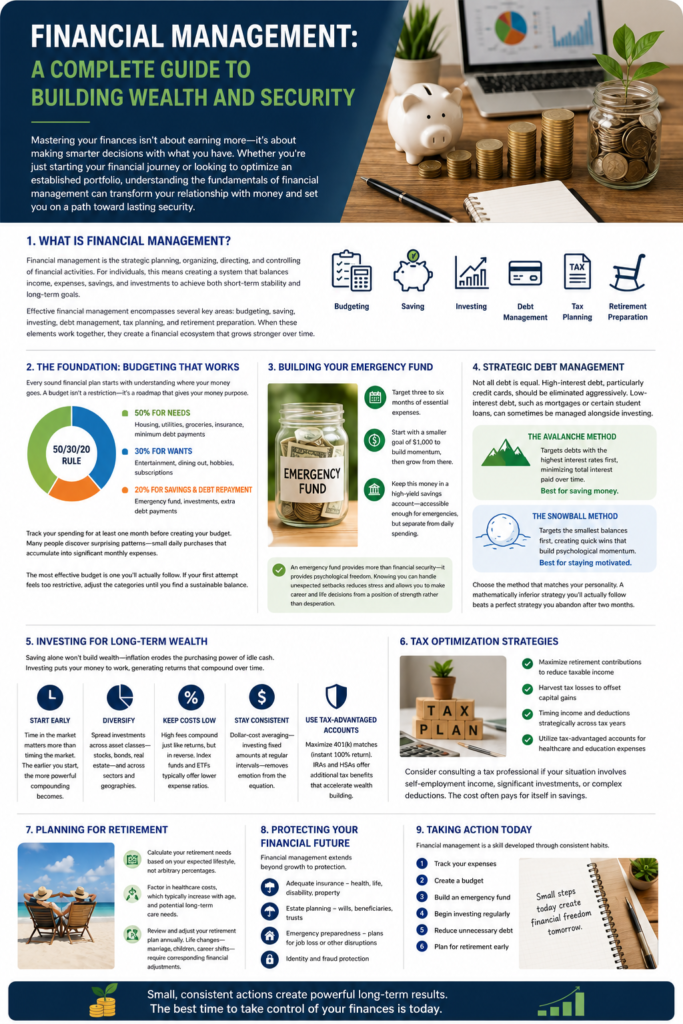
Managing money effectively is not just about earning more — it is about making smarter financial decisions. Whether you are beginning your financial journey or improving an existing financial plan, understanding the basics of financial management can help you build long-term wealth, reduce financial stress, and achieve financial freedom.
What Is Financial Management?
Financial management is the process of planning, organizing, controlling, and monitoring your financial resources to achieve personal or professional goals. For individuals, it involves balancing income, expenses, savings, investments, and debt to create a secure financial future.
Effective financial management includes:
- Budgeting
- Saving money
- Investing wisely
- Managing debt
- Tax planning
- Retirement preparation
- Risk management through insurance
When these elements work together, they create a strong financial foundation that grows over time.
The Foundation of Financial Success: Budgeting
Every successful financial plan begins with a budget. A budget is not a restriction; it is a roadmap that helps you control your money instead of letting your money control you.
The 50/30/20 Budget Rule
A simple and effective budgeting method is the 50/30/20 rule:
- 50% for Needs
Housing, groceries, transportation, utilities, insurance, and minimum loan payments. - 30% for Wants
Entertainment, dining out, travel, hobbies, and subscriptions. - 20% for Savings and Debt Repayment
Emergency funds, investments, retirement savings, and extra debt payments.
Tracking your expenses for at least one month can help identify unnecessary spending and improve your financial habits.
Building an Emergency Fund
Before focusing heavily on investing, it is essential to create an emergency fund. Unexpected expenses such as medical emergencies, job loss, or vehicle repairs can disrupt your financial stability.
Financial experts recommend saving three to six months of essential expenses in an emergency fund.
Benefits of an Emergency Fund
- Reduces financial stress
- Prevents unnecessary debt
- Provides peace of mind
- Protects long-term investments
Keep this money in a separate savings account that is easy to access during emergencies.
Smart Debt Management Strategies
Not all debt is harmful. However, high-interest debt — especially credit card debt — should be reduced as quickly as possible.
Popular Debt Repayment Methods
1. Avalanche Method
Focus on paying off debts with the highest interest rates first.
Advantage: Saves more money on interest over time.
2. Snowball Method
Pay off the smallest debts first to build momentum and motivation.
Advantage: Creates psychological encouragement and faster visible progress.
Choose the method that best suits your financial personality and discipline.
Investing for Long-Term Wealth
Saving money alone is not enough because inflation reduces purchasing power over time. Investing helps your money grow through compounding returns.
Key Investment Principles
Start Early
The earlier you begin investing, the more time your money has to grow.
Diversify Investments
Spread your investments across different asset classes such as:
- Stocks
- Bonds
- Mutual funds
- Real estate
- Gold and commodities
Diversification helps reduce investment risk.
Keep Investment Costs Low
Low-cost index funds and ETFs often perform better over the long term compared to expensive actively managed funds.
Invest Consistently
Regular investing through SIPs or monthly contributions helps build wealth steadily and reduces emotional decision-making.
Tax Planning and Optimization
Effective tax planning helps you save more money legally and improve your overall financial growth.
Important Tax Strategies
- Maximize retirement contributions
- Use tax-saving investment options
- Claim eligible deductions
- Plan income and expenses efficiently
- Utilize healthcare and education tax benefits
Consulting a qualified tax professional can help maximize your savings if your financial situation becomes more complex.
Retirement Planning
Retirement planning should start as early as possible. The earlier you invest for retirement, the less financial pressure you will face later in life.
Consider These Factors
- Desired retirement lifestyle
- Healthcare expenses
- Inflation
- Long-term care needs
- Travel and personal goals
Review your retirement plan annually and adjust it based on life changes such as marriage, children, business growth, or career changes.
Protecting Your Financial Future
Building wealth is important, but protecting it is equally essential.
Important Protection Measures
- Health insurance
- Life insurance
- Disability insurance
- Estate planning
- Identity theft protection
- Secure financial practices
These safeguards can prevent major financial setbacks and protect your family’s future.
Final Thoughts
Financial management is a lifelong skill that improves with consistent practice and smart decision-making. Small financial habits practiced regularly can create significant long-term results.
Start Today
- Track your spending
- Create a realistic budget
- Build an emergency fund
- Reduce unnecessary debt
- Invest regularly
- Plan for retirement early
Your financial future is shaped by the decisions you make today. Start building a secure and prosperous future one step at a time.

